
STAINLESS STEEL AND UK WATER INFRASTRUCTURE | WHY IS STAINLESS STEEL A CORE PART OF UK WATER INFRASTRUCTURE?
Special Metric Materials is proving to be an important cog in the UK water treatment network’s infrastructure. In this blog, we will look at why stainless steel is a core part of UK water infrastructure. We will explore why stainless steel plays such a critical role in modern water systems, how it helps prevent contamination, and what future material trends mean for UK water projects.
Across the UK, water infrastructure is under increasing pressure to deliver reliability, safety, and long-term performance while meeting stricter environmental and regulatory expectations. Ageing assets, rising operational costs, and growing demand for clean, safe water mean that material selection has never been more important.
For engineers, contractors, and asset managers, choosing the right water treatment pipe materials directly impacts system longevity, maintenance requirements, and water quality outcomes. As a result, stainless steel water infrastructure is becoming an increasingly common specification across treatment plants, pumping stations, and distribution systems.
The Challenges Facing Modern Water Infrastructure
Much of the UK’s water network was designed decades ago, often using materials that are now approaching or exceeding their intended lifespan. Corrosion, leakage, and ongoing maintenance place significant financial and operational strain on utilities and contractors alike.
Key challenges include:
- Corrosion and material degradation in harsh environments
- Increasing compliance requirements for potable water quality
- Pressure to reduce operational downtime
- Long-term sustainability and lifecycle cost targets
Traditional materials such as coated carbon steel or certain plastics can struggle under demanding operational conditions. Over time, coatings degrade, corrosion forms, and maintenance requirements increase, creating risks to both performance and water quality.
This is why engineers are increasingly turning to corrosion-resistant piping solutions that offer durability without compromising hygiene or reliability.
How Stainless Steel Improves Longevity in Water Infrastructure
- Corrosion Resistance
One of the primary advantages of stainless steel is its natural resistance to corrosion. The chromium-rich oxide layer that forms on the surface protects against rust and chemical attack, even in aggressive environments commonly found in treatment processes.
Unlike coated materials, stainless steel does not rely on external protection systems that can fail over time. This makes it particularly well-suited for both internal process piping and external installations exposed to moisture and changing conditions.
- Extended Service Life
Infrastructure investments are expected to perform for decades. Stainless steel systems can achieve significantly longer service lives compared to alternative materials, reducing replacement cycles and minimising disruption to operations.
In many applications, stainless steel installations remain operational for 50 years or more with minimal degradation, a key reason it is widely specified in stainless steel water treatment plants across the UK.
- Reduced Maintenance Requirements
Maintenance costs represent a substantial portion of total infrastructure expenditure. Stainless steel reduces maintenance needs by:
- Eliminating coating failures
- Resisting scaling and corrosion build-up
- Maintaining structural integrity over time
Fewer repairs mean reduced downtime, improved operational reliability, and safer working environments for maintenance teams.
- Lifecycle Cost Benefits
Although stainless steel may involve higher initial material costs, the total lifecycle cost is often lower. Reduced maintenance, fewer replacements, and improved system efficiency deliver long-term financial advantages that increasingly influence procurement decisions.
Preventing Contamination Through Material Choice
Material selection is not only about durability. When it comes to why stainless steel is a core part of UK water infrastructure, it also plays a vital role in protecting water quality.
- Hygienic Surface Properties
The smooth, non-porous surface of stainless steel helps minimise bacterial adhesion and biofilm formation. This makes it ideal for hygienic piping water industry applications where cleanliness and water purity are essential.
Smooth internal finishes also improve flow efficiency and simplify cleaning procedures.
- Reduced Risk of Contamination
Corroding materials can release particles into water systems, affecting clarity, taste, and compliance standards. Rust and coating breakdown products introduce contamination risks that utilities must actively manage.
Stainless steel avoids these issues, maintaining consistent material integrity throughout its operational life.
- Traceability and Compliance
Modern water projects increasingly require full material traceability and certification. Stainless steel components are typically supplied with detailed documentation confirming composition and manufacturing standards, helping engineers demonstrate compliance and quality assurance throughout the project lifecycle.
Future Materials Trends for UK Water Treatment Plants
As infrastructure evolves, material choices are increasingly shaped by sustainability, efficiency, and digital integration.
- Sustainability and Whole-Life Carbon:
Long-lasting materials contribute directly to reduced environmental impact. Because stainless steel systems require fewer replacements and are fully recyclable at end of life, they align well with decarbonisation goals across the utilities sector.
- Modular and Offsite Construction:
Offsite fabrication and modular construction methods are becoming more common in water projects. Stainless steel’s dimensional consistency and weldability make it ideal for prefabricated pipe assemblies that reduce installation time on site.
- Standardisation of Metric Systems:
There is growing adoption of metric stainless systems across UK infrastructure projects. Standardisation improves compatibility, simplifies specification, and enhances supply chain efficiency — particularly where rapid delivery is required.
- Smart Infrastructure Compatibility:
Modern treatment facilities increasingly incorporate monitoring technology and automation. Long-life materials such as stainless steel support this shift by reducing the need for intrusive maintenance once systems are operational.
How Special Metric Materials Supports the UK Water Industry
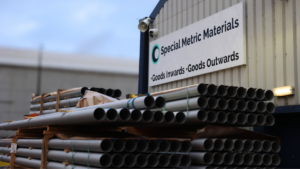
Alongside material selection, reliable supply and technical expertise are critical to successful project delivery. This is where Special Metric Materials plays an important role in supporting water industry projects across the UK and is also why stainless steel is a core part of UK water infrastructure
- Specialist Stainless Steel Materials
Special Metric Materials focuses on high-quality stainless steel tubular products, fittings, valves, and associated components designed for demanding industrial environments. Their expertise helps customers select appropriate water treatment pipe materials suited to specific operational conditions and compliance requirements.
- Next-Day Delivery from UK Stock
Project timelines in the utilities sector are often tight, particularly during maintenance shutdowns or urgent repair works. By holding extensive UK stock ranging from DN15-DN800 (larger sizes available from production), Special Metric Materials provides rapid availability with next-day delivery options, helping contractors avoid costly delays.
- Experienced Technical Sales Support
Material selection can be complex, especially when balancing corrosion resistance, hygiene requirements, and cost considerations. Experienced technical sales staff work closely with engineers, contractors, and procurement teams to provide practical guidance, supporting projects from specification through to delivery.
This combination of specialist knowledge, product availability, and responsive service helps ensure infrastructure projects stay on schedule while meeting performance expectations.
The demands placed on UK water infrastructure continue to grow, making long-term reliability and water quality more important than ever. Material choice sits at the centre of this challenge.
From improved durability and reduced maintenance to enhanced hygiene and sustainability, stainless steel offers clear advantages for modern systems. As utilities invest in resilient assets designed for decades of operation, stainless steel water infrastructure is increasingly recognised as a dependable, future-ready solution.
With the right materials, and the right supply partner, water treatment facilities can achieve stronger performance, lower lifecycle costs, and greater confidence in system integrity for years to come.